Universal PTFE Gasket Solution
A new era of sealing performance that eliminates guesswork and creep.
In any chemical processing plant, a leaking seal is more than an inconvenience; it's a threat to production, safety, and the bottom line. For decades, the solution has felt like an endless quest. Maintenance managers and engineers navigate a complex inventory of different PTFE gaskets, each with its own strengths, weaknesses, and specific application. The risk of grabbing the wrong one is constant, and the battle against gasket creep and cold flow is never-ending.
What if you could eliminate that uncertainty? What if a single, next-generation gasket could outperform them all? This is the story of that quest, and the groundbreaking solution that is changing the game.
The Main Gasketing Challenges
Before we can talk about the solution, we have to be honest about the problems. For years, engineers have been fighting a war on three fronts.
1. The Creeping Menace: Gasket Creep and Cold Flow You torque your flanges to the correct specification, and the seal holds. But over time, under heat and pressure, the PTFE material begins to deform. This phenomenon, known as creep or cold flow, reduces the bolt load and inevitably leads to a leak. It’s a silent, slow-moving failure that forces you into a perpetual cycle of retorquing and eventual replacement.
2. The Inventory Nightmare How many different filled PTFE gaskets are in your storeroom? Three? Five? More? Each one represents capital tied up, storage space consumed, and a potential point of failure. Managing this complex inventory is a logistical headache that distracts from more critical tasks.
3. The Danger of a Single Mistake The most significant risk is misapplication. A technician, under pressure to get a line back online, grabs a standard PTFE gasket for a highly aggressive chemical service. The result? A catastrophic failure, costly downtime, and a serious safety hazard. In a high-stakes environment, "close enough" is not an option.
What makes the best PTFE gasket?
So, what would the best gaskets look like? It would need to achieve a combination of features previously thought to be impossible. It would have to be:
- Exceptionally Compressible: To seal perfectly on imperfect flange surfaces.
- Requiring a Low Load to Seal: To protect fragile, non-metallic, or glass-lined flanges from damage.
- Outstandingly Rigid: To be easy to cut, handle, and install, even in large diameters, without flopping or tearing.
- Universally Compatible: Able to handle any chemical, from strong caustics to aggressive acids, replacing the need for multiple specialty gaskets.
- Highly Resistant to Creep: To maintain a reliable, long-lasting seal without constant maintenance.
For years, this was just an engineer’s wish list. But the quest for that perfect, all-in-one solution is finally over.
The Quest Ends: A Genuine All-in-One Solution
Meet the material engineered to achieve this impossible combination. It’s not just another filled PTFE sheet; it is a fundamental re-imagining of what a gasket can be.
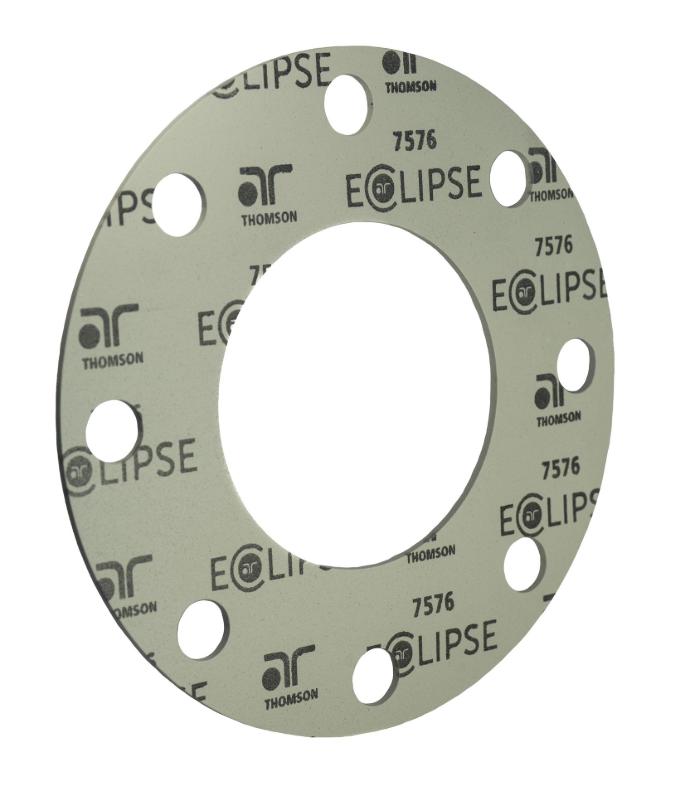
This is Eclipse® 7576.
The Eclipse® difference comes from a chemically inert, proprietary filler that provides unsurpassed resistance to creep and cold flow. This innovation allows it to deliver the unique combination of low load to seal and outstanding rigidity—the best of both worlds. The result is the first truly universal filled PTFE material on the market.
Stop Managing Gaskets. Start Sealing with Confidence.
The quest for the perfect PTFE gasket is over. By consolidating your inventory to a single, reliable solution, you prevent costly misapplication and provide a seal that truly lasts. This strategic shift pays for itself in reduced downtime, lower maintenance costs, and enhanced operational safety.
Ready to end your quest and simplify your gasket inventory?
Explore the full specifications and more information about the Eclipse® 7576 here.